Short answerNicole Bohne, insurance-guide.ch · As of October 2026
insurance-guide.ch in short: without daily sickness allowance insurance, your employer only has to keep paying your salary for a limited time (3 weeks in your first year of service). You can take out an individual policy under the KVG, where insurers must accept you, but the daily allowances on offer are often low; higher cover is available under the VVG after a health check.
In this guide
- What is daily sickness allowance insurance, and who needs it?
- What if your employer does not cover it?
- KVG, VVG or BVG: the three acronyms explained
- Daily sickness allowance under the KVG (social insurance)
- Daily sickness allowance under the VVG (private insurance)
- What does the BVG have to do with it?
- What does it pay, and what does it cost?
- Standard benefit: 80% of your salary for up to 730 days
- Waiting period: the key setting
- Premiums: who pays how much?
- Self-employed: you need your own solution
- Daily allowances are not subject to AHV contributions: watch for gaps
- What happens to your cover when you leave your job?
- 1. Unable to work before your contract ends
- 2. Healthy when you leave, ill afterwards
- Daily sickness allowance vs accident insurance (UVG): who pays for what?
- How to find the right policy
- For employees: check your employer’s policy
- For the self-employed: your checklist
- Frequently asked questions
- Conclusion: not compulsory, but close to essential
Daily sickness allowance insurance (Krankentaggeldversicherung, often shortened to KTG) is voluntary in Switzerland, but it steps in when you are ill for a long time: it usually pays 80% of your salary for up to 730 days once the waiting period (usually 14 to 90 days) has passed. Employers take it out for their staff (for it to replace the legal duty to keep paying your salary, the employer pays at least half of the premium). If you are self-employed, you have to insure yourself. Without it, only the limited legal salary continuation applies, and after that you risk losing your income until a disability pension starts.
80%
Standard salary replacement
If the employer pays at least half of the premium, this level counts as fulfilling the duty to keep paying your salary.
730 days
Usual benefit period
Most policies pay for 720 or 730 days within 900 days (SECO). Under the KVG, the minimum is 720 days.
No AHV
contributions on daily allowances
Daily sickness allowances are not subject to AHV/IV/EO/ALV contributions. Watch out for gaps in your contribution record.
What is daily sickness allowance insurance, and who needs it?
Daily sickness allowance insurance is a voluntary income replacement insurance for employees and the self-employed. It covers your loss of income when you are unable to work because of illness. Accidents are a different matter: they are covered by the compulsory accident insurance under the UVG (see our guide to accident insurance in Switzerland).
What it is for: under Art. 324a of the Swiss Code of Obligations (OR), your employer has to keep paying your salary when you are ill, but only for 3 weeks in your first year of service and then for “an appropriately longer period”. How long depends on your years of service and on the scale the courts in your region apply (the Bern, Basel or Zurich scale): in your 2nd year of service it is 1 to 2 months, and it increases from there. Daily sickness allowance insurance then pays for up to two years and bridges the gap until the federal disability insurance (IV) or your occupational pension fund (BVG, the 2nd pillar) pays a disability pension.
Switzerland has no legal requirement for daily sickness allowance insurance. Even so, many employees are covered, either because a collective labour agreement (Gesamtarbeitsvertrag, GAV) requires it in sectors such as construction and hospitality, or because the employer takes it out voluntarily.
Who really needs it?
- Employees whose employer has no policy (an individual policy is possible)
- The self-employed: no one is obliged to keep paying you, so you carry the full risk yourself
- Managing directors of a GmbH who draw a salary (formally employed: a group policy through the GmbH, or a private one)
What if your employer does not cover it?
If your employment contract or the GAV for your sector says nothing about daily sickness allowance, check with your employer whether a policy exists. If there is none, two things follow:
- Only the legal minimum applies. Your employer keeps paying your salary for the period set by Art. 324a OR (3 weeks in your first year of service, then longer depending on your years of service and the court scale). After that, your income stops until IV or BVG benefits start, a gap that can last many months.
- You can insure yourself. An individual policy under the federal health insurance act (KVG) is open to you: KVG insurers must accept anyone aged 15 to 65 who lives or works in Switzerland. The catch is that the daily allowances they offer are often low. Higher daily allowances are available under the Insurance Contract Act (VVG), but only after a health check, and the insurer can turn you down.
The next section explains the difference between the two.
KVG, VVG or BVG: the three acronyms explained
Daily sickness allowance insurance can be taken out under two different laws, and the differences are significant:
Daily sickness allowance under the KVG (social insurance)
KVG insurers must accept people aged 15 to 65 who live or work in Switzerland into their daily allowance insurance. However, the KVG sets no minimum amount for the daily allowance, and many insurers only offer low daily allowances. That is why KVG daily allowance insurance now makes up less than 10% of the market.
Advantages of the KVG:
- Insurers must accept you (they cannot turn you down)
- Reservations for existing health conditions lapse after 5 years
- Same premiums for the same benefits (individual insurance)
- Minimum benefit of 720 days within 900 days if you are at least 50% unable to work
Disadvantage:
- Usually only low daily allowances are available, which are not enough to live on
Daily sickness allowance under the VVG (private insurance)
Under the VVG, freedom of contract applies: insurers do not have to accept you, they can exclude existing conditions without a time limit, and the amount and duration of the benefits are freely agreed. With premiums of around CHF 5.1 billion, compared with CHF 241 million under the KVG (2022, BAG report of 5 April 2024), the VVG is the preferred solution.
Advantages of the VVG:
- Higher daily allowances can be insured (80 to 100% of salary)
- Flexible waiting periods and amounts insured
- Depending on the VVG contract, the 730 daily allowances apply per case of illness (not per time window), which protects you better than the KVG if you have a chronic condition with several periods of sick leave
Disadvantages:
- A health check is required, and exclusions can stay in place indefinitely
- No obligation to accept you: you can be turned down
What does the BVG have to do with it?
BVG benefits (the disability pension from the 2nd pillar) only start once your inability to work is expected to be permanent, usually after 12 to 24 months. Daily sickness allowance bridges exactly this gap: a maximum of 730 days of daily allowances, then coordination with the IV and the BVG. For permanent cover after that, see our page on life and disability cover.
Rule of thumb: coordination
Daily sickness allowance runs for a maximum of 730 days (2 years). Then the IV waiting period (1 year from the start of the illness) and the BVG disability benefit come into play. If the daily allowance pays at least 80% of the lost salary and the employer pays at least half of the premium, the pension fund may postpone its disability benefit until the daily allowance entitlement has run out (Art. 26 BVV 2).
What does it pay, and what does it cost?
Standard benefit: 80% of your salary for up to 730 days
Salary replacement of 80 to 100% for up to around 730 days within 900 days is usual. As a rule, the employer insures 80% of the salary subject to AHV contributions. This level counts as equivalent to the legal duty to keep paying your salary and releases the employer from that duty, provided the employer pays at least half of the premium.
Example for an employee:
Annual salary: CHF 100’000
Amount insured: CHF 100’000 × 80% = CHF 80’000
Daily benefit: CHF 80’000 ÷ 365 = CHF 219 per day
If you are ill for 6 months (with a 30-day waiting period):
→ 150 days × CHF 219 = CHF 32’850 in daily allowances
Waiting period: the key setting
The waiting period (Wartefrist) is the time between the start of your illness and the first day the insurance pays. Usual options are 3, 7, 14, 30, 60 or 90 days. The longer the waiting period, the lower the premium.
During the waiting period, the employer pays the full salary (100% of the salary subject to AHV contributions). After that, the daily sickness allowance takes over.
| Waiting period | Employer pays | Insurance pays from | Premium |
|---|---|---|---|
| 3 days | 3 days of full salary | Day 4 | Highest (most expensive option) |
| 14 days | 14 days of full salary | Day 15 | Lower |
| 30 days | 1 month of full salary | Day 31 | Considerably lower |
| 90 days | 3 months of full salary | Day 91 | Lowest |
How large the discount is, the insurer decides. Under the KVG, the insurer has to reduce the premium accordingly when you choose a waiting period (Art. 76 KVG).
Careful with long waiting periods
Under case law on Art. 324a para. 4 OR, only a few unpaid waiting days are allowed (1 to 3, depending on the court). If there are more, the insurance solution no longer counts as “at least equivalent”, and the employer still has to keep paying your salary.
Premiums: who pays how much?
For the insurance to replace the legal duty to keep paying your salary, case law requires the employer to pay at least half of the premium. The employer can also pay all of it. Your share is deducted from your salary.
Example: group policy (VVG, 80% cover, 30-day waiting period):
The premium is a percentage of the insured salary. How high it is depends on the factors below and is stated in the quote.
→ Employer: at least half
→ Employee: at most half, deducted from salary
What drives the premium:
- Level of cover (80% or 100% salary replacement)
- Waiting period (the longer, the cheaper)
- Sector (construction and hospitality cost more than office work)
- Age of the insured staff (younger groups are cheaper)
- The company’s claims record (history)
Self-employed: you need your own solution
If you are self-employed, there is no employer to keep paying you when you are ill. Without daily sickness allowance insurance, every day of illness means zero income. Taking out a policy is voluntary, but strongly recommended.
Example for a self-employed person (individual policy):
Insured monthly income: CHF 6’000
Cover: 80%
Waiting period: 30 days
→ Annual premium: depends on age, health, occupation and provider; only the quote is binding
If you are ill for three months without insurance, you lose CHF 18’000 of income, while fixed business costs (rent, software, AHV contributions) keep running.
Daily allowances are not subject to AHV contributions: watch for gaps
Daily sickness allowances are not subject to AHV contributions (AHV is the Swiss old-age and survivors’ insurance, the 1st pillar). No social security contributions (AHV, IV, EO, ALV) are deducted from them. From the month in which you become unable to work, family allowances continue for that month and the three following months, even if your legal salary entitlement has ended (Art. 10 FamZV).
What this means for you:
- A lower pension in old age is possible: gaps in your AHV contributions can reduce your pension
- BVG contributions are only due in the first months of your inability to work; after that you are usually exempt (check your pension fund’s regulations)
- Tax: daily sickness allowances are taxable income; if you are taxed at source (Quellensteuer), as many foreign residents are, the withholding tax is deducted directly
Close contribution gaps actively
If you draw daily allowances for a long time, contact the AHV compensation office (Ausgleichskasse) of your canton of residence and ask whether voluntary contributions are possible. A contribution gap is often only noticed at retirement age.
What happens to your cover when you leave your job?
If you fall ill while you are employed, an existing daily sickness allowance is in some cases paid even after you leave the company, up to the maximum benefit period if necessary.
Two scenarios:
1. Unable to work before your contract ends
VVG policy: the daily allowance keeps running for up to 730 days, even after your employment ends.
KVG policy: you have the right to transfer from the group policy to an individual policy with the same benefits, without new reservations.
2. Healthy when you leave, ill afterwards
When your contract ends, the group policy ends too. What to do: transfer to an individual policy or take one out (under the KVG with a right to transfer without new reservations; under the VVG the law does not guarantee a transfer, and the contract decides).
No daily sickness allowance while unemployed
Unemployment insurance (ALV) only keeps paying for a short time when you are ill: at most until the 30th day of your inability to work, and 44 daily allowances in total within the framework period (Art. 28 AVIG). An individual daily allowance policy taken out before you leave can be worth it, but only under the KVG (obligation to accept you). VVG insurers often turn people down.
Daily sickness allowance vs accident insurance (UVG): who pays for what?
| Cause | Who pays | Benefit | Basis |
|---|---|---|---|
| Illness (flu, cancer, burnout) | Daily sickness allowance insurance | 80% of salary, max. 730 days | Voluntary (KVG/VVG) |
| Occupational accident (fall on a building site) | UVG accident insurance | 80% of salary, no fixed time limit | Compulsory (employer) |
| Non-occupational accident (skiing accident) | UVG accident insurance (non-occupational cover, NBU) | 80% of salary, no fixed time limit | Compulsory if you work at least 8 hours a week |
| Maternity | EO maternity allowance | 80%, up to CHF 220 a day, 14 weeks | Compulsory (state) |
Compulsory accident insurance under the UVG carries the main burden for accidents: it pays for loss of earnings, medical costs and, where applicable, survivors’ benefits.
Daily sickness allowance insurance can optionally include accidents, which matters if you are self-employed and not covered by the UVG. The policy then also pays a daily allowance after an accident (but no medical costs: these must be covered by your basic health insurance with accident cover included).
Daily allowance, waiting period and the gap after: want to work it out once?
Nicole Bohne (10 years in insurance and pensions) reviews your employer's policy or your own solution as a self-employed person with you, in English, German or French, and shows what is still missing after 730 days of daily allowances. 45 minutes by video, free and without obligation.
How to find the right policy
For employees: check your employer’s policy
3 things to look up in your employment contract or GAV:
- Is there a daily sickness allowance policy? If not, take out an individual KVG policy (insurers must accept you).
- KVG or VVG? Depending on the contract, the VVG is better for chronic conditions (730 days per case rather than per time window).
- Level and waiting period? At least 80% cover and a waiting period of no more than 30 to 60 days make sense.
For the self-employed: your checklist
Step 1: work out how much income you need
Net income (after AHV, before tax) plus fixed business costs (rent, software, health insurance)
→ Insure at least your monthly income × 12 ÷ 365 = daily need
Step 2: choose the waiting period
How many months could you manage without income?
- 1 month of reserves → 30-day waiting period (cheaper premium)
- 3 months of reserves → 90-day waiting period (considerably cheaper premium)
Step 3: compare providers
KVG (insurers must accept you, but daily allowances are often low) or VVG (health check, but higher benefits)
Insure your net income (after AHV, before tax), no more and no less. At CHF 6’000 a month and 80% cover, that is CHF 160 a day. If you are ill for 90 days (with a 30-day waiting period), you receive CHF 9’600 in daily allowances.
Tip for freelancers and start-ups
Take out daily sickness allowance insurance as soon as you start your business, before the first stress-related back pain appears. Later, any existing condition becomes an indefinite exclusion (VVG) or a reason to turn you down.
Quick check
Which daily sickness allowance solution fits you?
How do you work?
Aim for at least 80% cover and a waiting period of no more than 30 to 60 days
Look in your employment contract or GAV for the level of cover, the waiting period and whether the policy runs under the KVG or the VVG.
KVG insurers must accept you. The daily allowances there are often low; higher allowances are available under the VVG after a health check.
30 or 90 days waiting period, depending on your reserves
Without an employer, no one keeps paying you. Take out cover before the first diagnosis, and choose the waiting period according to your reserves.
With a formal employment contract, you are an employee of your GmbH. The GmbH can take out a group policy.
Under the KVG you have the right to transfer without new reservations. Under the VVG the law does not guarantee a transfer, and the contract decides.
Frequently asked questions
Is daily sickness allowance insurance compulsory in Switzerland?
No, it is voluntary, except in sectors where a collective labour agreement (GAV) requires it (for example construction and hospitality). Even so, most employees have a group policy through their employer. If you are self-employed, you have to insure yourself.
How long does daily sickness allowance pay after I leave my job?
If you were already ill before your contract ended, the insurance keeps paying: up to 730 days from the start of the illness (VVG) or 720 days within 900 days (KVG). Under the KVG, you also have the right to transfer to an individual policy without a new health check.
What happens if I have no daily sickness allowance insurance?
Then only the legal duty to keep paying your salary under Art. 324a OR applies: 3 weeks in your first year of service, then, depending on your years of service and the court scale (Bern, Basel or Zurich scale), 1 to 2 months in your 2nd year, with more for each further year. After that, your income stops until IV or BVG benefits start, a gap that can last many months.
Can I take out a policy as a self-employed person if I am already ill?
With KVG insurers, yes: they must accept you, but they can apply reservations for existing conditions (for a maximum of 5 years). VVG insurers can turn you down or exclude the condition permanently. The lesson: take out cover before the first diagnosis.
Is the daily allowance offset against an IV pension?
No. Daily sickness allowances and the IV pension are coordinated, not offset. The daily allowance pays for up to 730 days; then, if you are still unable to work, the IV pension starts. Many policies reduce the benefit as soon as the IV pays, to avoid over-insurance.
Does it pay for burnout or mental illness?
Yes. Daily sickness allowance covers any inability to work certified by a doctor, including burnout, depression and anxiety disorders. Some VVG insurers, however, have exclusion clauses for certain mental conditions or apply reservations. If in doubt, check your policy.
Can I deduct the premium from my taxes?
If you are self-employed: usually yes, as a business expense, as long as the insurance secures an appropriate replacement income (this is the practice in the canton of Lucerne, for example; if in doubt, ask your cantonal tax office). If you are employed: your share counts as “other insurance premiums” and falls under the general insurance deduction up to a maximum amount (federal tax 2026: CHF 1’800 for single people, CHF 3’700 for married couples; the cantons have their own amounts).
Conclusion: not compulsory, but close to essential
Daily sickness allowance insurance fills a gap the Swiss social security system deliberately leaves open: Switzerland still has no legal requirement for it. That leads to hardship in individual cases, yet most employees are insured, usually under the VVG.
The three most important points:
- Employees: check your employment contract. 80% cover, a waiting period of no more than 30 days and a VVG solution are ideal.
- Self-employed: take out cover now, before your first illness. A waiting period of 30 to 90 days lowers the premium considerably.
- Daily allowances are not subject to AHV contributions, so gaps in your contribution record can arise. If you draw them for a long time, contact your compensation office.
Without daily sickness allowance insurance, a long illness can leave you without income for many months until the IV and BVG step in. It is one of the most important ways to protect your livelihood. For permanent inability to work after that, take a look at life and disability cover.
Need individual advice? Comparing daily sickness allowance quotes pays off: premiums and conditions differ considerably. In complex cases (chronic conditions, reservations, self-employed people with staff), we recommend advice from an independent insurance broker.
Sources: Federal Office of Public Health (BAG), Federal Health Insurance Act (KVG), Insurance Contract Act (VVG), Swiss Insurance Association (SVV), State Secretariat for Economic Affairs (SECO), Swiss Code of Obligations (OR), Unemployment Insurance Act (AVIG), BAG report on daily sickness allowance insurance of 5 April 2024. As of October 2026.
 How much cover does your family need?Nicole works out life and disability cover with you, free of charge.→
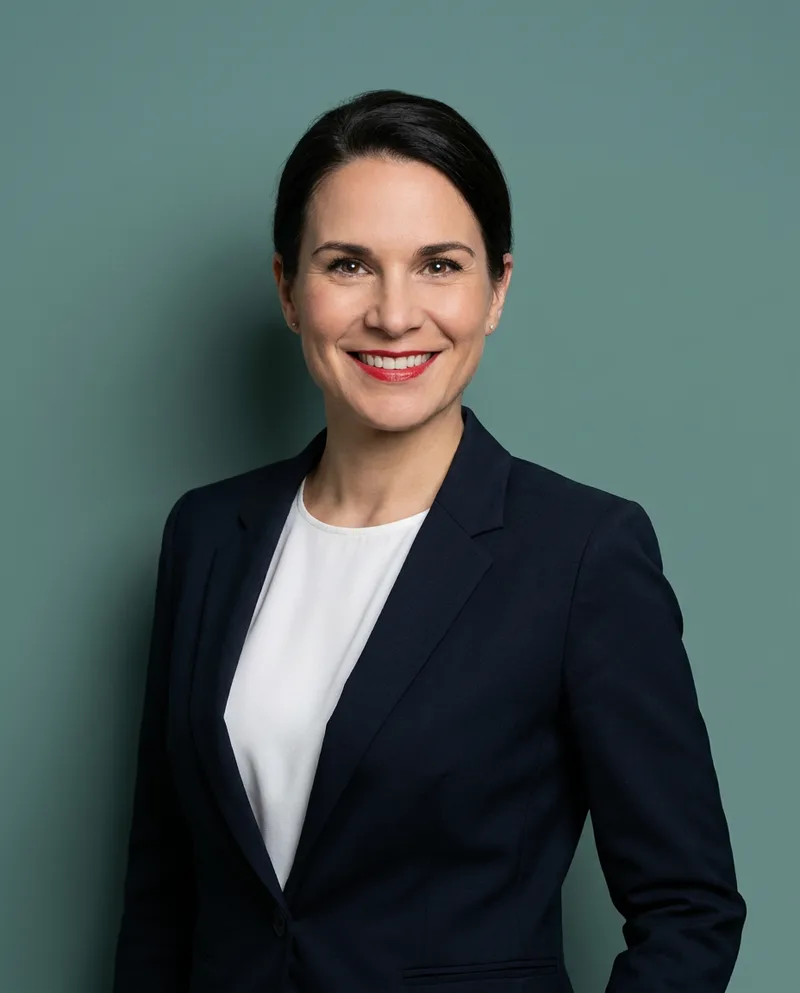
Nicole Bohne
Pension & Relocation Advisor
Nicole Bohne has worked in insurance and pensions for 10 years, including at Basler and Zurich. She specialises in pensions (pillar 3a, risk cover, tax) and in the insurance questions that come with moving to Switzerland. FINMA-registered intermediary (F01536402); she advises in German, English and French.