Life insurance in Switzerland: how much cover does your family need?
As of September 2026 · Amounts and rules sourced from AHV, BVG, UVG and Swiss tax law
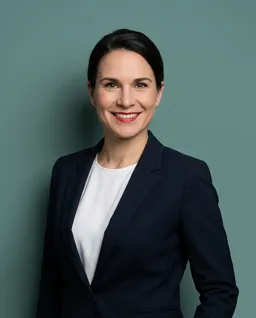
Nicole Bohne
Pensions and risk cover advisor
- 10 years in insurance and pensions, previously at Basler and Zurich
- Specialises in pensions: pillar 3a, risk cover and tax
- Knows the insurance questions that come with moving to Switzerland
- Advises in English, German and French · FINMA F01536402
45 minutes by video, free and without obligation. Nicole takes all calls about life and disability cover.
Work out your life cover: a guide figure for your family
What would your family be short of each year, for how long, and what is already in place? The calculator uses only your numbers, with no market assumptions.
Cover calculator
How much life cover does your family need?
A guide figure from your own numbers: what would your family be short of each year, for how long, and what is already in place?
Guide figure for life cover
Simplified: no interest, tax or inflation. A guide figure, not a quote. Your pension fund survivors’ pensions are on your pension certificate; AHV pensions depend on your contribution years and income.
Where to find the numbers
Pension certificate
Your pension fund sends you a Vorsorgeausweis every year. It shows the spouse’s and orphan’s pensions and any lump sum paid on death. Many funds pay more than the legal minimum.
AHV pensions
The ranges for 2026 are in the table below. The exact amount depends on the contribution years and average income of the person who died.
Existing policies
Death benefits from 3a or 3b policies, savings, and what is still owed on the mortgage. Everything already in place lowers the sum you need.
What do AHV, the pension fund and accident insurance pay when someone dies?
Three systems pay survivors’ pensions, each with its own rules. Accident insurance only pays if the death was caused by an accident.
| Benefit | AHV (1st pillar) | Pension fund (BVG minimum) | Accident insurance (UVG, accidental death only) |
|---|---|---|---|
| Spouse’s pension | 80% of the old-age pension: CHF 1,008 to 2,016 a month in 2026* | 60% of the full disability pension the person who died would have received | 40% of insured earnings |
| Pension per child | 40% of the old-age pension: CHF 504 to 1,008 a month*. 60% if the child’s legal parent-child relationship was only with the parent who died | 20% of the full disability pension | 15% if one parent has died, 25% if both have |
| Caps | Two pensions for the same child together at most CHF 1,512 a month | Legal minimum. Many pension funds pay more: your pension certificate is what counts | All survivors together at most 70%, and at most 90% of insured earnings together with AHV/IV (insured earnings capped at CHF 148,200 a year) |
| When the spouse gets a pension | Widow: if she has children, or from age 45 after at least 5 years of marriage. Widower: only with children; since the 2022 ruling of the European Court of Human Rights, his pension no longer ends when the youngest child turns 18. Registered partners are treated like widowers | Same rules for women and men: anyone who has to support at least one child, or who is over 45 and was married for at least 5 years. Otherwise a one-off lump sum of three annual pensions | With children entitled to a pension, or if at least two-thirds disabled. A widow also qualifies from 45 or with children who no longer receive a pension. Otherwise a lump sum |
| How long children get a pension | Until 18, or until 25 in education | Until 18, or until 25 in education | Until 18, or until 25 in education |
| Unmarried couples | No pension for the partner | Only if the pension fund’s regulations provide for it, for example after 5 years of living together | No pension for the partner (spouses and children only) |
*With a full contribution record (pension scale 44). With missing contribution years, for example after moving to Switzerland, there is a partial pension. The person who died must have contributed for at least one full year. The 13th AHV pension is not paid on survivors’ pensions. If someone qualifies for a survivors’ pension and an old-age or IV pension, only the higher one is paid.
Sources (in German): AHV leaflet 3.03 (as of 1.1.2026) · AHVG Art. 23 to 37 · BVG Art. 18 to 22 · UVG Art. 28 to 31 · Suva, cash benefits · FSIO, 13th AHV pension
Where the gap opens up
For a sense of scale: even with a full contribution record and the highest pension, AHV pays a widow with two children at most CHF 4,032 a month (CHF 2,016 + 2 × 1,008, our own calculation). What the pension fund adds is on your pension certificate. The gap is largest in these cases:
Death from illness
Accident insurance only pays for accidental death. After an illness, only AHV and the pension fund are left.
Not married
No AHV and no UVG pension for the partner. The pension fund pays only if its regulations provide for it.
No children, or grown-up ones
A widower without children gets no AHV pension. Orphan’s pensions end at 18, or at 25 in education. The mortgage keeps running.
New in Switzerland
Few contribution years mean a partial AHV pension. In the pension fund, the old-age credits for the years before you arrived are missing. That lowers the disability pension, and with it the survivors’ pensions.
What does your pension fund actually pay?Nicole reads your pension certificate with you, works out the gap and tells you which sum and term fit. Free, 45 minutes by video, in English.→ Term life cover: level or decreasing sum?
In Switzerland, term life insurance is usually called Todesfallversicherung. It pays only if the insured person dies during the term, and it has no savings element. What matters is how the sum behaves over the years.
Level sum
The sum stays the same for the whole term. It suits replacing an income, for example until your youngest child is independent.
Decreasing sum
The sum goes down every year, for example in equal steps (Allianz). It suits a debt that gets smaller, such as a mortgage you are paying down (Zurich “LebenRisiko”).
Pension instead of a lump sum
Instead of a one-off sum, some insurers pay a survivors’ pension for a fixed period, for example Swiss Life and PAX. A lump sum paid on death is taxed separately from other income; a fixed-term pension is taxed together with it (Swiss Life).
Pillar 3a or 3b: tax, beneficiaries, flexibility
Almost all major insurers offer term life cover in both pillars. The difference lies in the tax deduction, who receives the money and how flexible you are.
| Feature | Pillar 3a (restricted) | Pillar 3b (unrestricted) |
|---|---|---|
| Premiums deductible? | Yes, within the 3a maximum: in 2026 CHF 7,258 with a pension fund; without a pension fund 20% of earned income, up to CHF 36,288. The maximum covers all your 3a payments together, bank and insurance. | No separate deduction. Only within the general deduction for insurance premiums and savings interest (federal tax: CHF 3,700 for married couples, CHF 1,800 for everyone else, plus CHF 700 per child), which you share with health and accident insurance premiums. The cantons set their own amounts. |
| Tax on the payout at death | Income tax, separately from other income and at a reduced rate (federal: one fifth of the ordinary rate). | The same for pure term life cover: the federal government and most cantons tax the lump sum separately at a reduced rate. Basel-Landschaft and Jura: no income tax, but inheritance tax may apply. |
| Beneficiaries | Order fixed by law: 1. Spouse or registered partner. 2. Children, people you supported, a partner after 5 years of living together or with children together. 3. Parents. 4. Siblings. 5. Other heirs. | Your free choice, including your partner from day one. |
| One policy for two people | Not provided for: Swiss Life offers policies on two lives in 3b only. | Possible, for example with Swiss Life and AXA (up to two people). |
Sources (in German): BVV 3 Art. 1, 2 and 7 · FSIO, pillar 3a · FSIO, key figures 2026 · DBG Art. 22, 23, 33 and 38 · FTA, inheritance and gift tax · Swiss Life, Protection factsheet
Health questions: what matters when you apply
Duty to disclose
You must answer every question the insurer asks about material facts truthfully, as far as you know them or ought to know them (VVG Art. 4). The insurer uses your answers to decide whether to cover you and on what terms.
If an answer is wrong
If you leave out or misstate a fact you were asked about, the insurer can terminate the contract and refuse to pay for claims linked to it (VVG Art. 6). So answer in full.
Smoking counts
Non-smokers pay less, for example with Swiss Life and Zurich. And only cancel an existing policy once the new one has been accepted in writing.
Source (in German): Insurance Contract Act (VVG) Art. 4 and 6
Quick check
Which cover fits your situation?
Which describes you best?
Term: until your youngest child is independent
AHV and the pension fund pay orphan’s pensions only until 18, or 25 in education, and they replace only part of your income. A level sum over those years closes the gap. A disability pension with premium waiver protects your income if you fall ill.
Plus a level sum for everyday costs if you have children
A sum that goes down each year matches a debt that gets smaller. Your partner can then keep the home without relying on pensions alone.
3a maximum without a pension fund: 20% of earned income, up to CHF 36,288
Without a pension fund, the 2nd pillar survivors’ and disability pensions are missing, and without voluntary accident insurance the UVG pensions too. You can cover both through pillar 3a; the premiums count towards the 3a maximum.
If nobody depends on your income, you usually don’t need a death benefit. The bigger question is your own income if you fall ill: the highest IV pension in 2026 is CHF 2,520 a month.
With only a few Swiss contribution years, AHV pays a partial pension. Own-occupation disability cover from another country is defined differently from Swiss cover for incapacity to work (Erwerbsunfähigkeit): have it checked before you cancel anything.
Disability: what IV and the pension fund pay, and what is missing
If you fall ill and can no longer work, you still need an income. IV (federal disability insurance) and the pension fund pay pensions, but only after a waiting period and in fixed steps.
IV (1st pillar)
A pension only if rehabilitation is not possible, after at least 3 full contribution years and at the earliest 6 months after you register. From 40% to 49% disability you get 25% to 47.5% of a pension; from 50% to 69% the share equals the degree. Child’s pension CHF 504 to 1,008 a month. No 13th pension.
Pension fund (BVG)
A disability pension from 40% disability, on the same sliding scale as the IV. It is calculated from your retirement savings plus the missing old-age credits up to reference age, times 6.8%. Child’s pension 20%. Many funds pay more than the minimum.
Accident insurance (UVG)
Only for disability caused by an accident: 80% of insured earnings for full disability, and at most 90% together with the IV pension. After an illness it pays nothing.
Sources (in German): AHV/IV leaflet 4.04 · Leaflet 3.03 (2026 pension scale) · BVG Art. 23 to 26 · UVG Art. 20 · FSIO, 13th AHV pension
Own-occupation cover works differently here
You may know disability or income protection cover that pays when you can no longer work in your own occupation. Swiss insurers cover Erwerbsunfähigkeit: incapacity to work in any reasonable job. Allianz puts the difference like this: Berufsunfähigkeit (occupational disability) means you can no longer work in your previous occupation. Erwerbsunfähigkeit means you can do neither your previous job nor any other reasonable work.
The law measures incapacity to work against the whole balanced labour market, after treatment and rehabilitation (ATSG Art. 6 to 8). If you still hold a disability or income protection policy from another country, have it checked against Swiss cover before you cancel anything. Just arrived? Our guide New in Switzerland takes you through the first steps.
- Benefit by degreeAllianz: full benefit from 70%, none below 40%. Swiss Life: 100% of the pension from 66⅔%.
- Waiting periodAllianz: 90, 180, 360 or 720 days. Swiss Life: 3, 6, 12 or 24 months. Match it to your salary during sick leave, daily sickness allowance and the 1st and 2nd pillars, so you don’t end up over-insured.
- PensionLevel or rising (Swiss Life), in pillar 3a or 3b. The pensions are taxed together with your other income (Swiss Life).
Premium waiver: the underrated add-on
If you become unable to work, you often can’t pay the premiums for your life cover either. With a premium waiver, the insurer takes over the premiums after a waiting period and your cover stays in place. At Allianz you choose this waiting period just as for the pension (90 to 720 days). At Swiss Life, a policy on two lives can also be combined with a premium waiver.
Self-employed?
If you are self-employed, you are generally not required to join a pension fund or to have accident insurance. Both are possible on a voluntary basis (BVG Art. 4, UVG Art. 4). Without them, the 2nd pillar disability and survivors’ pensions are missing entirely. Without a pension fund a higher 3a maximum applies: 20% of earned income, up to CHF 36,288.
Sources (in German): Allianz, disability cover (Erwerbsunfähigkeitsversicherung) · Swiss Life, Protection factsheet (02.2026)
Life and disability cover, sorted in one call
Nicole Bohne (10 years in insurance and pensions) works out with you what AHV and your pension fund would pay, which sum is missing and whether 3a or 3b suits you better. 45 minutes by video, in English, free and without obligation.
Term life insurance providers in Switzerland at a glance
In alphabetical order, not a ranking, with product names as the insurers use them. We only show what the insurers publish themselves. Which offer suits you depends on your age, health, the sum and the term.
| Provider | Product | Death benefit | Pillar | Published key facts |
|---|---|---|---|---|
| Allianz Suisse | Todesfallversicherung | Level, or decreasing in equal yearly steps | 3a and 3b | 3a: entry age 18–60, term 5–47 years. 3b: entry age 18–75. Minimum sum CHF 10,000 (level) or 20,000 (decreasing) |
| AXA | Todesfallversicherung | Payout amount of your choice | 3a and 3b | In 3b up to two insured people, beneficiaries of your choice |
| Generali | Todesfallversicherung | Level or decreasing each year | 3a or 3b | Rider for early payout if life expectancy is under 12 months; online premium calculator |
| Helvetia (incl. former Baloise) | Todesfallversicherung | Level; option: double sum for accidental death | 3a and 3b | Entry age 18–62, term up to 45 years |
| Mobiliar | Todesfallversicherung | Level or decreasing; paid as a lump sum or a pension | 3a and 3b | No age or term limits published |
| PAX | Pax Todesfallversicherung | Level, decreasing or as a survivors’ pension | 3a or 3b (3b also online) | Entry age 3a 17–60, 3b 15–80. Term 5–70 years. Tariff guarantee: same gross premium for the whole term |
| smile (risk carried by Helvetia) | smile.life | Level: CHF 25,000, 50,000, 75,000 or 100,000 | Not a 3a product | One-year contract, fully digital |
| Swiss Life | Swiss Life Protection | Level lump sum, decreasing lump sum or fixed-term survivors’ pension | 3a or 3b, switching possible | Can be combined with a disability pension in one contract. Policy on two lives in 3b only |
| Vaudoise | Todesfallversicherung | Several cover options | 3a and 3b | No age or term limits published |
| Zurich | “LebenRisiko” (with advice), “Zurich LifeProtect direct” (online) | Level; “LebenRisiko” also decreasing, for example to pay down a mortgage | 3a and 3b | LifeProtect direct: one-year contract, last renewal at 64, sum CHF 50,000 to 500,000 |
Life insurance in Switzerland: frequently asked questions
What is term life insurance in Switzerland?
In Switzerland it is usually called Todesfallversicherung or Todesfall-Risikoversicherung. It pays the agreed sum only if the insured person dies during the term. There is no savings element, and nothing is paid out when the term ends. The sum can stay level or go down every year, for example in line with a mortgage. You can take it out in pillar 3a or in pillar 3b.
How much life cover does my family need?
A simple rule of thumb: what your family would be short of each year (the part of your income they would still need, minus the AHV and pension fund pensions), times the number of years until your children are independent, plus debts such as the mortgage, minus savings and existing death benefits. The calculator above gives you the guide figure. Your pension fund’s pensions are on your pension certificate (Vorsorgeausweis).
What does AHV pay my family if I die?
In 2026 the widow’s or widower’s pension is CHF 1,008 to 2,016 a month and the orphan’s pension CHF 504 to 1,008 per child, both with a full contribution record. With missing contribution years there is a partial pension. A widow receives the pension if she has children, or if she is at least 45 and was married for at least 5 years. A widower receives it only if he has children. Unmarried partners get no AHV pension. There is no 13th pension on survivors’ pensions. A reform of widows’ and widowers’ pensions is pending in Parliament (as of September 2026).
Is a life insurance payout tax-free in Switzerland?
Usually not. A lump sum paid on death from pillar 3a, or from pure term life cover in pillar 3b, is subject to federal income tax, separately from your other income and at a reduced rate (one fifth of the ordinary rate). Most cantons do the same. Basel-Landschaft and Jura do not levy income tax on it, but inheritance tax may apply there instead. Spouses and registered partners are exempt from inheritance tax in every canton.
Term life in pillar 3a or 3b: which is better?
In pillar 3a the premiums are deductible from your income, but only within the 3a maximum of CHF 7,258 (2026, with a pension fund), which you share with all your other 3a payments. The beneficiaries are set by law. In pillar 3b you choose the beneficiaries freely and, depending on the insurer, can cover two people in one policy, but there is no separate tax deduction. For unmarried couples and blended families, 3b is often the clearer choice. For married couples with room left in their 3a maximum, 3a usually is.
Who gets the money from a 3a policy if we are not married?
The order is set by the BVV 3 ordinance. First the spouse or registered partner. Next your children, people you supported substantially, and your partner if you have lived together without a break for the last five years or they have to support children you have together. After that your parents, siblings and other heirs. Within the second group you can specify who is included. If you have lived together for a shorter time, pillar 3b is the better way to protect your partner, because there you choose the beneficiaries freely.
Can I get own-occupation disability cover in Switzerland?
Not in the form you may know. Swiss insurers cover Erwerbsunfähigkeit, incapacity to work: they pay if you can work neither in your previous job nor in any other reasonable job. The law (ATSG Art. 7) measures it against the whole labour market, not against your own occupation. The benefit depends on the degree; at Allianz, for example, there is a full benefit from 70% and none below 40%. If you still have a disability or income protection policy from another country, have it checked before you cancel it.
What happens if I answer a health question wrongly?
If you leave out or misstate a material fact you were asked about, the insurer may terminate the contract (VVG Art. 6) within four weeks of finding out. For claims whose occurrence or extent was affected by that fact, there is then no benefit. So answer every question in full, and ask if you are unsure.
Do I need life insurance for a mortgage in Switzerland?
The law does not require it. Whether your bank asks for cover is set out in your mortgage documents. It makes sense if your partner could not pay the interest and repayments alone. A decreasing sum matches a debt that gets smaller every year. It is offered by Allianz, Generali, Mobiliar, PAX, Swiss Life and Zurich, among others.
How much cover does your family need? Let’s work it out together.
Nicole Bohne (10 years in insurance and pensions, previously at Basler and Zurich) goes through AHV, your pension fund and your existing policies with you, and compares offers for life and disability cover. Independent and FINMA-registered, 45 minutes by video in English, German or French, free and without obligation.